
Selection Stories
As a merchandiser in the fashion industry, I’ve always been fascinated by the work of fashion designers. They are the creative force behind every collection, turning ideas into garments that people eventually wear. For a long time, I wanted to have an honest conversation with a fashion designer for Abhirah—someone who wasn’t just experienced, but genuinely passionate about the craft.
Finally, I found that person.
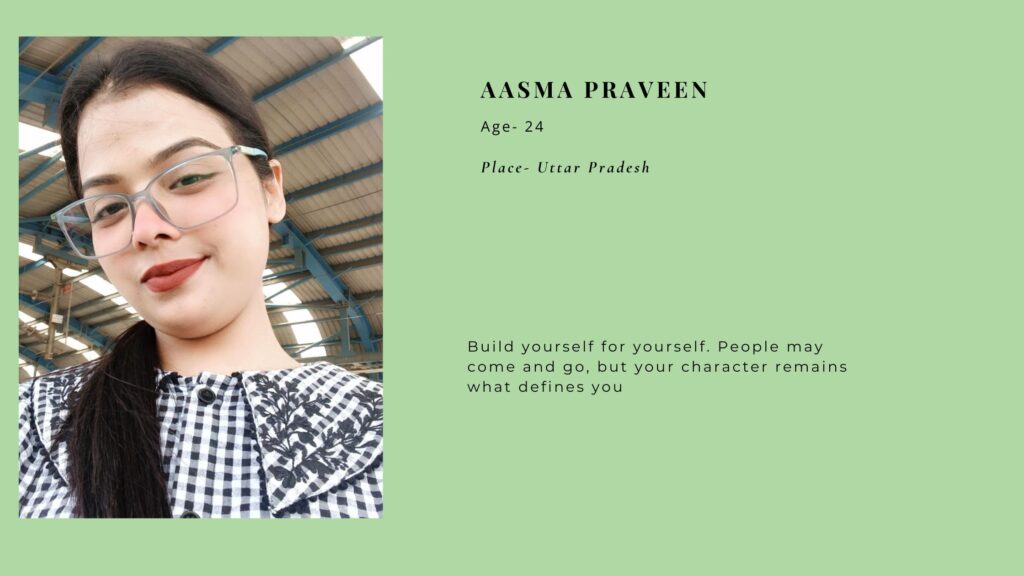
Meet Aasma Parveen—a fashion designer who balances her professional career while steadily building her own creative identity. Alongside her full-time job, she creates fashion content through reels and is taking meaningful steps toward building her own brand. It’s this blend of creativity, discipline, and ambition that made me want to sit down and talk with her.
In this conversation, we’ll go beyond the glamour often associated with fashion. We’ll explore the reality of a fashion designer’s work, the creative process, the challenges behind the scenes, and what it truly takes to build a career—and eventually a brand—in the fashion industry.
Thank you for reading, and I hope you enjoy this conversation as much as I enjoyed having it.
1. For someone who knows nothing about fashion design, how would you explain what a fashion designer is and what they actually do in simple words?
Aasma: A fashion designer is a creative professional who develops fashion products from the initial inspiration to the final wearable garment. They combine creativity, technical knowledge, and problem-solving skills to create designs that are aesthetically appealing, functional, and ready for production.
2. If someone like me is curious about fashion design but doesn’t want to go to college because they’re older, where should they start learning? What books, YouTube channels, websites, or practical steps would you recommend?
Aasma: You don’t need a fashion degree to start learning—especially if you’re older. Age is never a barrier.
Start with the basics:
- Learn about fabrics and textiles.
- Understand garment construction.
- Practice fashion sketching and illustration.
- Learn pattern making.
- Read about fashion history.
- Understand the principles and elements of fashion design.
- Study color theory and how different colors work together.
Recommended books:
- Patternmaking for Fashion Design
- Textilepedia
- Fashion Illustration for Fashion Designers
I also recommend following YouTube channels that teach fashion design, garment construction, pattern making, and textile knowledge through practical demonstrations.
3. Can you walk me through your complete design process from start to finish? What comes first, what happens next, and how does a simple idea eventually become a finished garment that people can wear?
Aasma: The fashion design process starts with understanding the purpose of the garment—who it’s for, where it will be worn, and why it needs to exist. Then I gather inspiration through research, create a mood board, decide on the color palette, fabrics, trims, and silhouettes, and begin sketching concepts.
Once a design is finalized, I prepare technical drawings and a tech pack, followed by pattern making and sample development. I review the fit, make the necessary corrections, and finalize the garment for production. Every stage involves refining the idea until it becomes a wearable, functional, and aesthetically appealing fashion product.
4. If salary were not a factor, what other reasons would make fashion design a worthwhile career choice?
Aasma: If salary weren’t a factor, I’d still recommend fashion design to people who genuinely enjoy creating and solving problems. This industry constantly challenges you to think differently, learn new techniques, and adapt to changing trends.
Fashion isn’t a field where you can keep doing the same thing every day—you have to keep improving. If you’re passionate and willing to learn continuously, it offers creative satisfaction, personal growth, and endless opportunities to build your own identity in the industry.
5. How much water do you consciously drink every day?
Aasma: I consciously drink around 4–5 liters of water every day.
6. Do you see AI as a competitor to fashion designers, or as a helpful tool that enhances creativity and productivity?
Aasma: I don’t see AI as a competitor to fashion designers. Instead, I see it as a powerful tool. The real competition is between designers who embrace AI and use it to improve their creativity and productivity, and those who ignore its potential. I believe AI is becoming an essential skill for every fashion designer.
7. What are the biggest differences between college life and professional life in the fashion industry?
Aasma: There is a significant difference between being a fashion student and working as a professional designer.
In college, we create highly experimental designs that showcase our creativity, often for fashion shows and runway presentations. In the industry, however, designers focus more on market acceptance. Before developing any design, they analyze whether customers will like it, whether it is commercially viable, and whether it fits the brand’s vision.
According to me, this is the biggest difference between college and the professional fashion industry.
8. What made you decide to build your own fashion brand instead of only designing for other brands?
Aasma: I am still working for a fashion brand, but yes, I definitely plan to build my own brand in the future.
My creativity, my understanding of design psychology, and the positive response my designs have received in both the Indian and international markets motivate me. The appreciation I receive from buyers, along with the constant flow of business ideas in my mind, inspires me to create a brand of my own.
9. What does a typical day look like when you’re running your own fashion brand?
Aasama: I don’t have experience running a large-scale fashion brand yet, but based on my understanding, the life of a fashion brand owner is full of challenges. It requires patience at every step, continuous learning, and the ability to solve new problems every day. Anyone who enjoys taking on new challenges and doesn’t give up easily can thrive in this industry.
10. What is life according to you?
Aasma: Life, according to me, is a beautiful journey filled with ups and downs, happiness and sadness, failures and successes. Every experience teaches me something and helps me grow.
One thing I’ve learned is that people may come and go, and situations may change, but believing in yourself and standing by yourself through every phase of life is what truly matters. When you have self-belief, you can face any challenge and keep moving forward.
———–Thank You———